Human Intelligence in the Age of AI
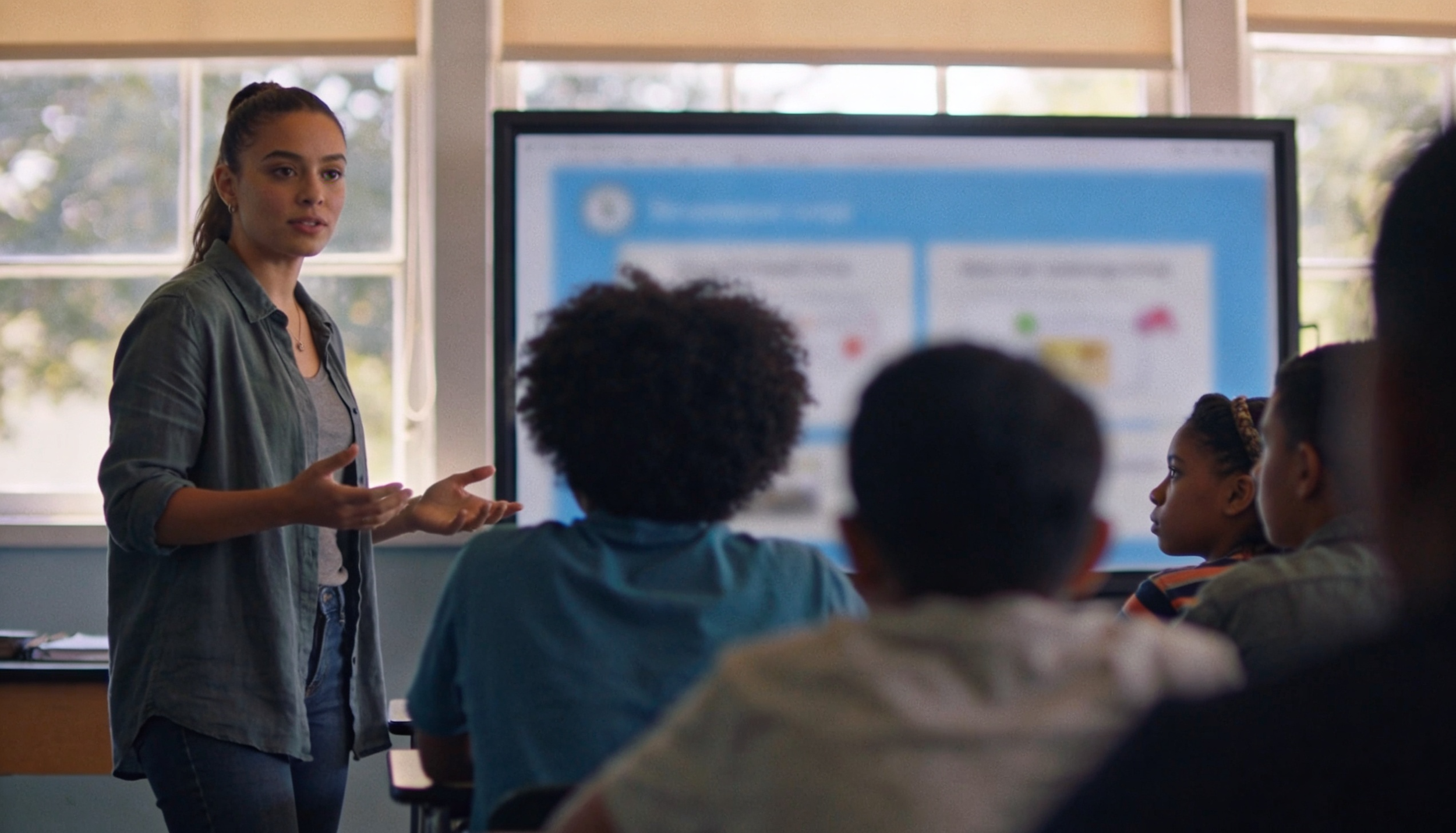
The most common question I am asked about AI in schools is how we ought to be using it. It is a fair question and a necessary one, and it is also, I have come to think, the second question. The first is quieter and harder to sit with. As machines get better at the things we used to treat as the summit of a good education, which human capabilities do we now have to protect and strengthen on purpose?
There is a phrase the OECD uses that has stayed with me: false mastery. It describes surface competence sitting on top of absent understanding. A piece of work looks accomplished, reads fluently, arrives at the right answer, and the understanding that was meant to be underneath it never formed. Every teacher has met a version of this long before anyone typed a prompt. What AI does is make it cheap, fast and very hard to see. A student can now produce the artefact of learning without the learning, and the artefact can be good enough to pass.
That is why I think the organising question for the next few years is not how we adopt AI, but what it means to remain intellectually human in an age of artificial capability. The distinction changes how a school plans. A school built around the first question invests in tools, training and access, and it should. A school built around the second question also invests in the capabilities a machine can imitate the output of but cannot do the growing for.
When I try to name those capabilities, the same ones keep surfacing: critical thinking, reasoning, dialogue, creativity, ethical judgement, metacognition, oracy, problem framing
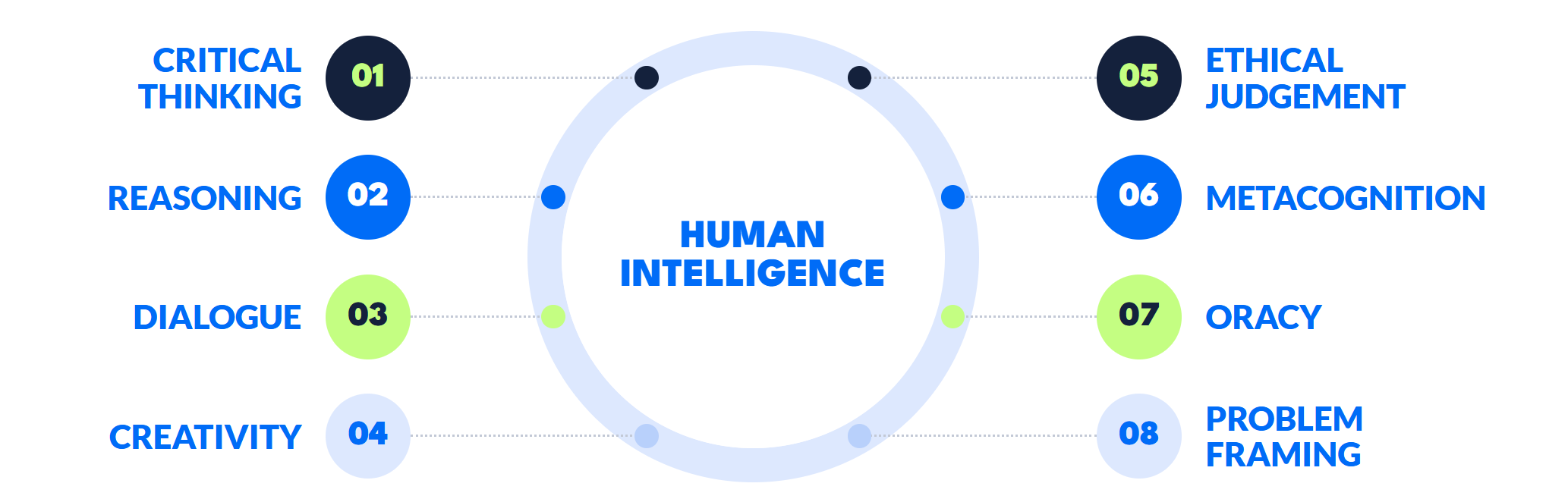
Human intelligence, held together. The eight capabilities this piece argues we now have to protect and strengthen on purpose. None of them is new to schooling. What has changed is that they have moved from the desirable extras of a good education to the point of it.
None of these is new to schooling. What is new is that they have moved from the desirable extras of a good education to the point of it. They are the parts of a young person that remain theirs when the tools have changed again, as they will.
Naming them is not a rhetorical exercise. A capability a school assumes is a capability nobody is accountable for. Once critical thinking or oracy is written down as something we are deliberately building, someone can be asked where it is taught, where it is practised, and how we would know a student had it. That is the distance between a value we would all sign up to in a staff meeting and a capability a school actually develops.
Three practical leadership actions for the year ahead
Define the non-negotiable human competencies. Decide, as a leadership team, the short list of capabilities you will protect whatever else changes, and make them visible in how the school talks about learning rather than buried in a policy nobody reopens. A list of five that everyone can name does more than a list of twenty nobody remembers.
Redesign assessment for authenticity. If the artefact of learning can now be produced without the learning, then assessment that only ever inspects the artefact tells you less each year. Build in more of the forms that are hard to fake: a student explaining their reasoning aloud, defending a position under questioning, showing the working and not only the result. A young person who can hold their thinking under scrutiny has shown something a submitted document does not reach.
Establish clear frameworks for AI use. Staff and pupils need to know what good use looks like, where the lines sit, and who they ask when a case falls outside the obvious. A framework is neither a ban nor a free-for-all. It is the shared understanding that lets people use a powerful tool well and stops the confident few from quietly setting the norm for everyone.
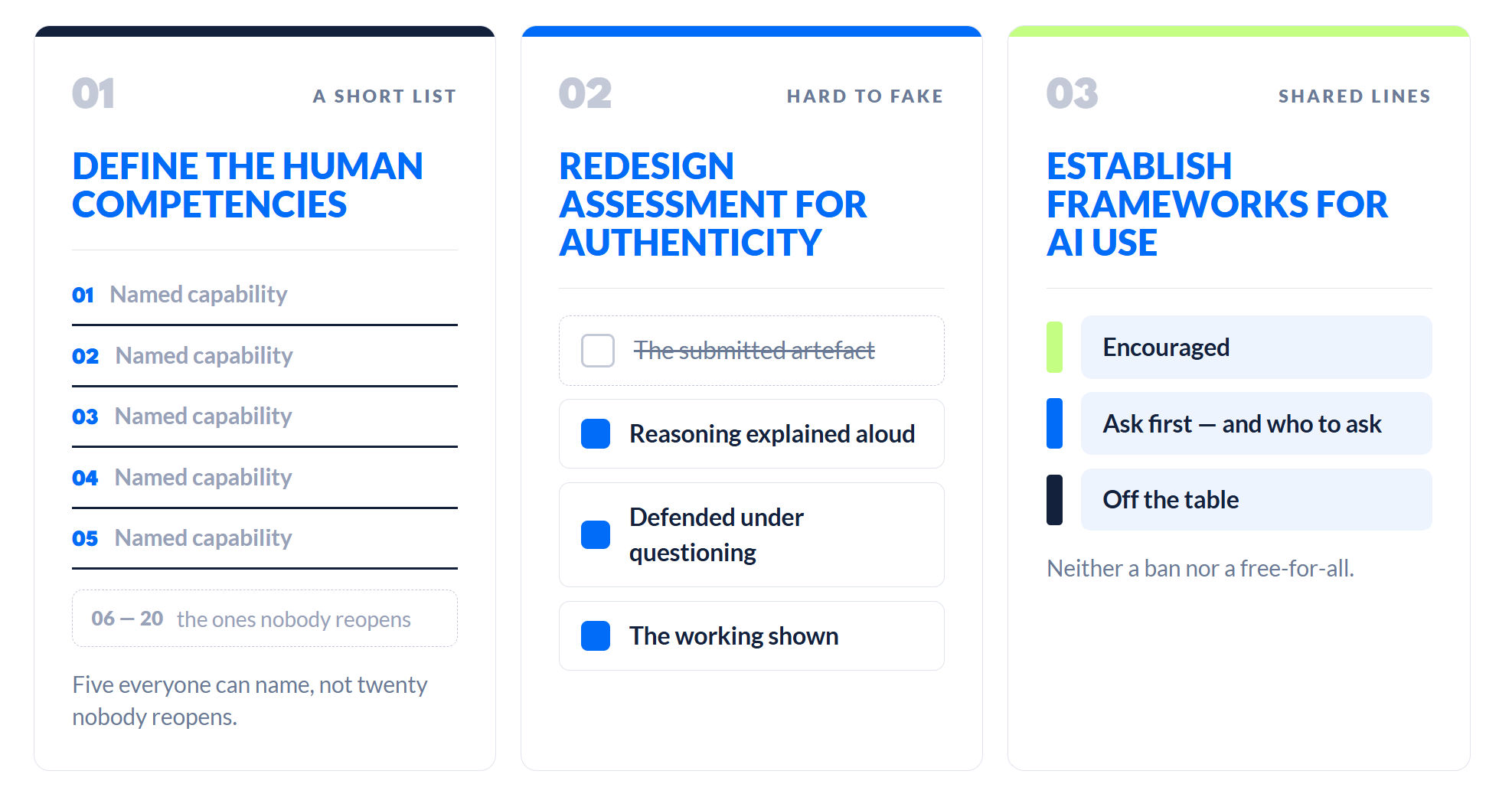
Three actions for the year ahead. Name a short list of human competencies the school will protect, widen assessment towards the forms that are hard to fake, and set a shared framework for AI use that is neither a ban nor a free-for-all.
None of this is an argument against AI. I use it, our staff use it, and the students will use it whether or not we plan for it. It is an argument for being clear-eyed about what the technology is for. AI is at its best when it amplifies human intelligence, and at its most corrosive when it stands in for it. Which of the two it becomes in a given school is not settled by the tool. It is settled by what that school chose to protect before the tool arrived.
The schools that come through this well will not be the ones that adopted the most, or the fastest. They will be the ones that stayed clear about what a human education is for, and built deliberately for the parts of a young person no machine can grow on their behalf.