EDNAS expands its AI-literacy curriculum to Key Stage 3
EDNAS has expanded its AI-literacy curriculum to Key Stage 3, giving schools one continuous programme from the first years of primary through to secondary.
The curriculum stays project-based and ready to teach across the phases, and is benchmarked to the OECD and UNESCO AI frameworks and mapped to the ADEK K-12 AI Education Framework.
Abu Dhabi, UAE, 2 September 2026. - EDNAS has extended its AI-literacy curriculum into secondary, giving schools a single, continuous programme from the early primary years through to Key Stage 3.

Until now the curriculum covered the primary phase. With the expansion, a school can teach one AI-literacy curriculum across the phases, with pupils progressing in one programme, against one standard, as they move up. The approach is the same throughout: project-based and ready to teach, with lesson plans, class slides, worksheets and termly assessment built into every unit.
"AI literacy is not something a child should start in one school phase and begin again in the next," said Liam Stewart, Managing Director and Head of Primary at EDNAS. "Building it continuously, from a pupil's first years right through into secondary, is how it actually takes hold. This expansion lets a school do exactly that, in one programme with one clear standard."
The curriculum maps to the EDNAS AI Competency Framework and is benchmarked to the OECD AI Literacy Framework and UNESCO's AI Competency Framework for Students, and mapped to the ADEK K-12 AI Education Framework, so a school can see the international standard it is teaching to.
Alongside the expansion, three additions now run through every part of the curriculum:
A cross-curricular link on each lesson, showing the subject it connects to, so AI literacy is visible as part of the wider curriculum.
An AI interaction level on each lesson, from teacher-led demonstration to pupils using an approved tool, with an offline teacher-demonstration option for any lesson that would put a tool in pupils' hands.
A termly baseline and summative assessment, so schools can see where pupils start and track their progress against the curriculum aims.
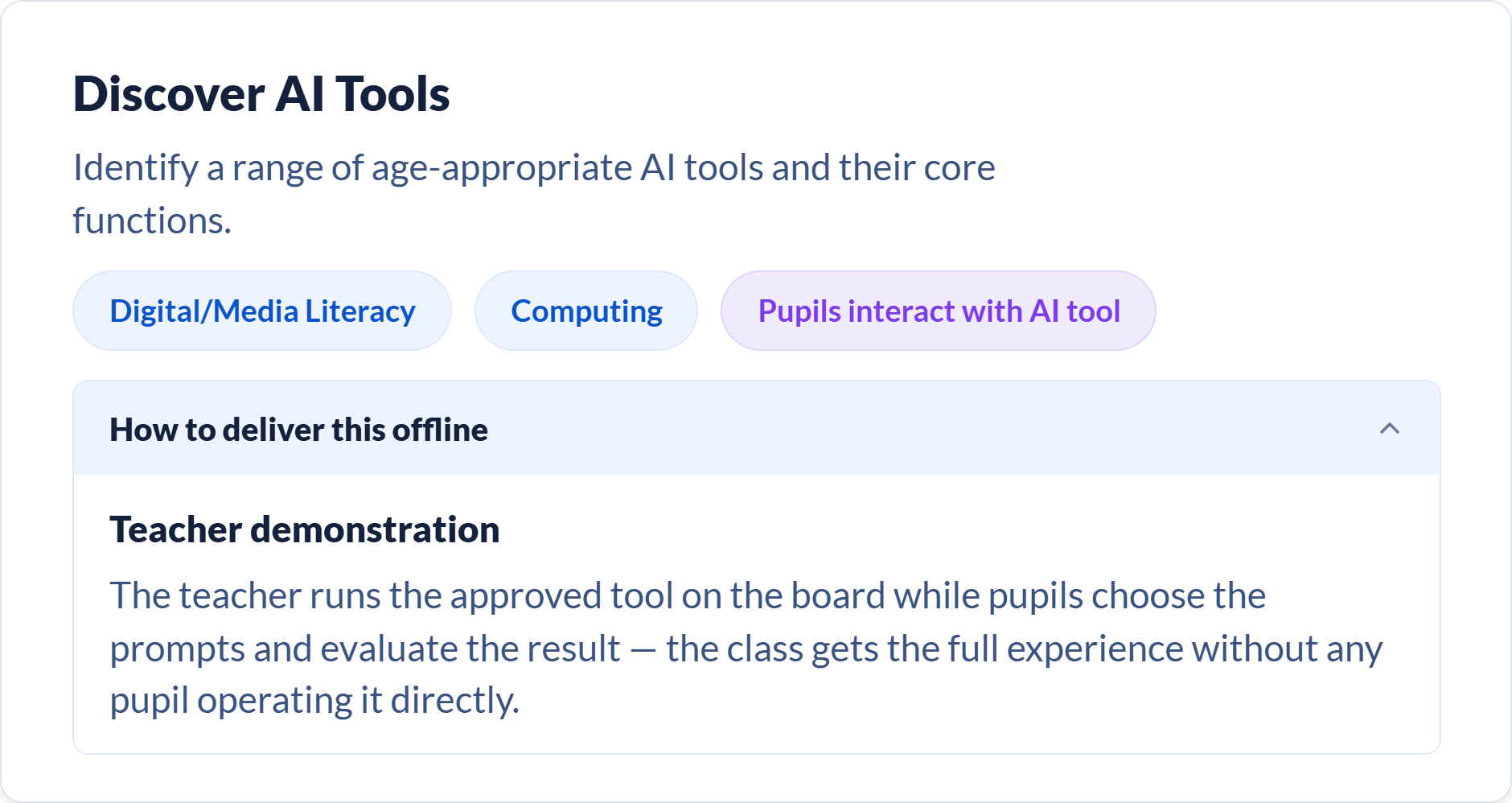
Every lesson carries its cross-curricular links and AI interaction level, with an offline teacher-demonstration option built in.
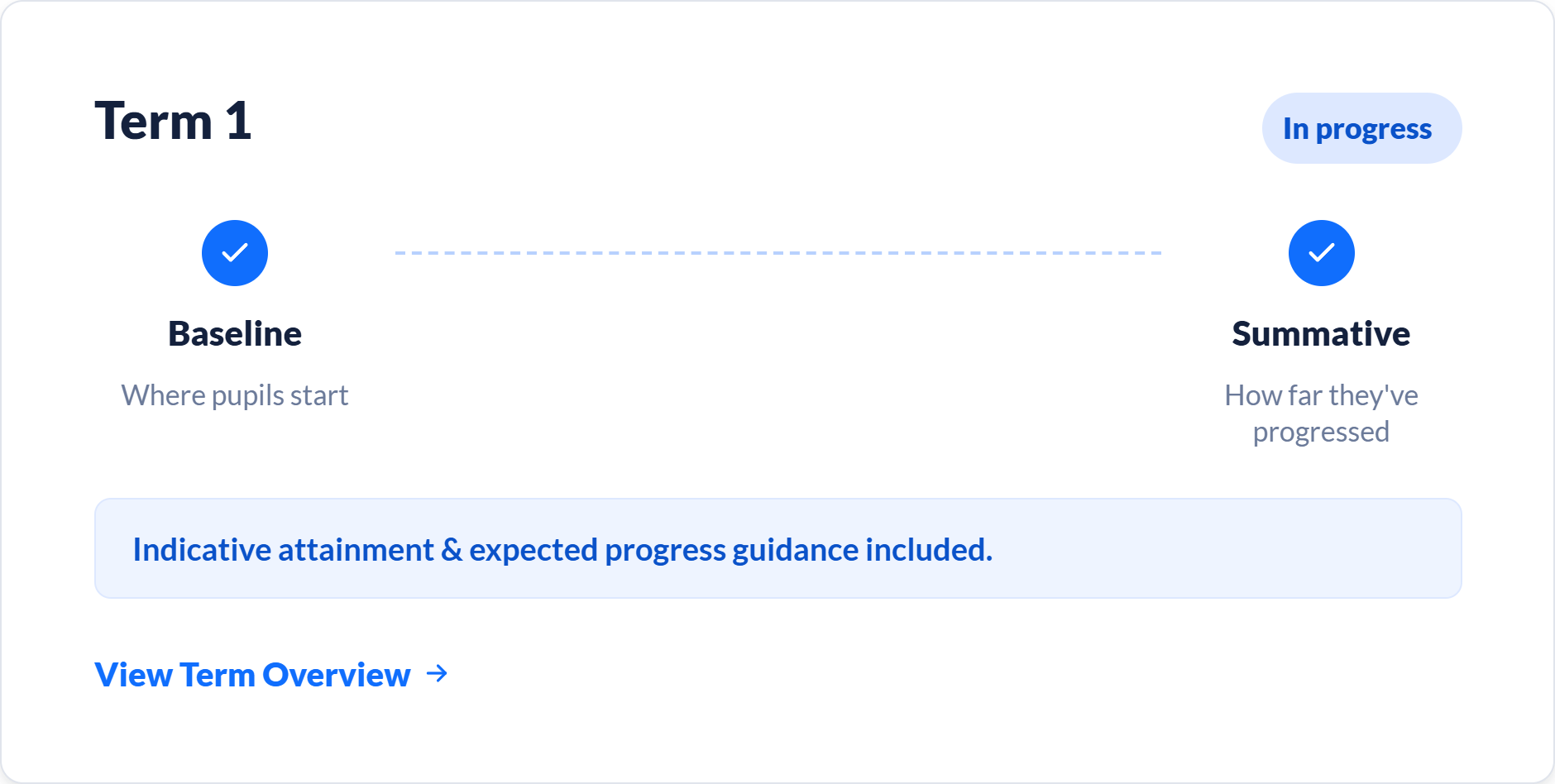
Each term opens with a baseline and closes with a summative assessment, so schools can see where pupils start and how far they progress.
Schools can adopt the EDNAS curriculum for the 2026-27 academic year now, with teacher-training cohorts open alongside it. The curriculum is available at ednas.academy.