Many of the roles today's pupils will go on to hold have not been invented yet. A case for organising learning around the capabilities that carry from one subject, and one context, to the next.
A child who started Year 1 this September will finish school in 2039. As the person responsible for how our primary phase plans its curriculum, I find that date a useful discipline. It is far enough away that I cannot say with any confidence which jobs will be waiting for that child, or which technology they will be using when they get there.
Designed for a more stable world
Much of our curriculum architecture was designed for a more stable world, where knowledge was relatively fixed, career pathways were predictable and school could prepare pupils for known destinations. Labour markets are now being reshaped by automation, the transition to green economies, shifting patterns of globalisation, new digital industries and more flexible models of work. Many of the roles our pupils will eventually hold do not exist yet.
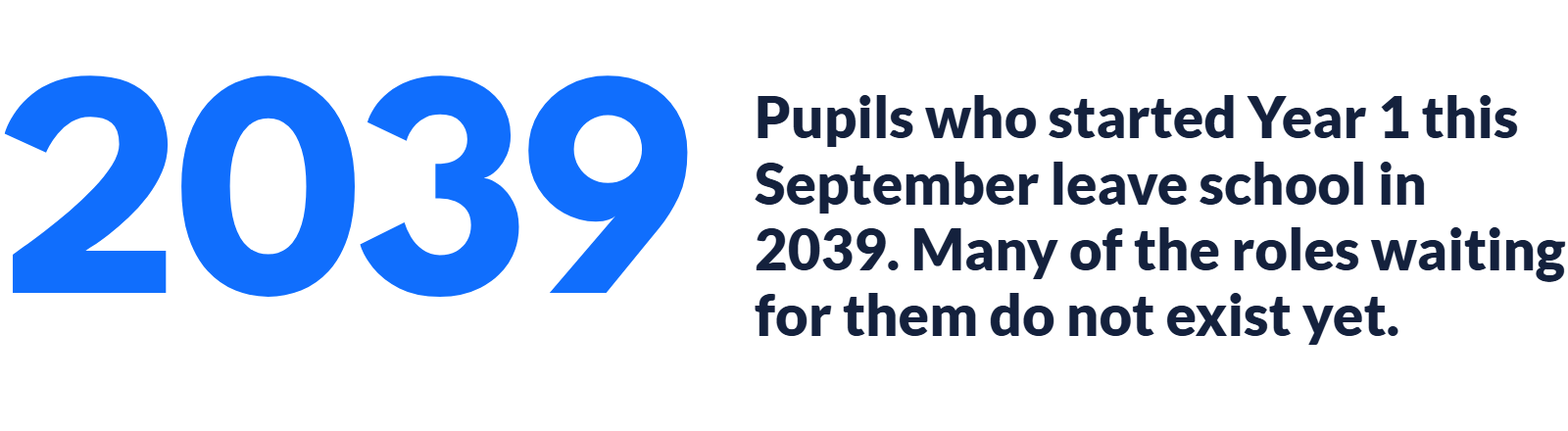
That leaves school leaders with a fundamental question. If we cannot predict the jobs, what are we preparing pupils for?
From coverage to capability
Curriculum conversations still tend to start from content coverage. Knowledge matters, and it remains the foundation of everything a school does. As the organising principle for a curriculum, though, it is no longer enough on its own. The more strategic question is which transferable capabilities pupils will need, whatever the industry or context they end up in.
Future-focused schools are increasingly clear about the answer, and they are developing these capabilities deliberately.
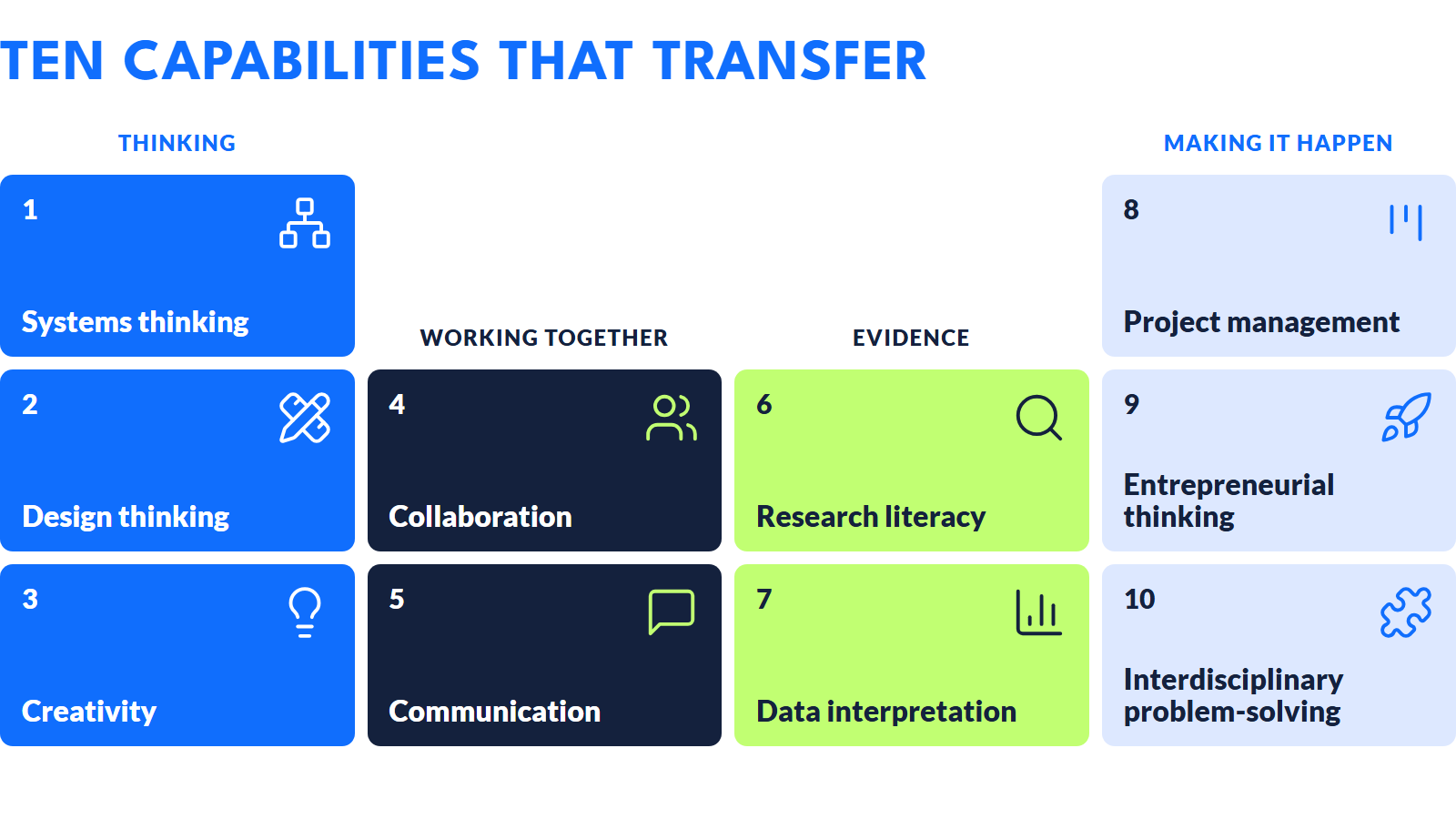
Ten capabilities that transfer: systems thinking, collaboration, project management, communication, entrepreneurial thinking, design thinking, research literacy, creativity, data interpretation and interdisciplinary problem-solving.
None of these can be added on at the end. Each one depends on how learning is structured, how it is experienced and how it is assessed.
What it asks of a school
Around the world, schools are moving towards models that reflect this: project-based learning, inquiry-led approaches, STEAM integration and problem-solving rooted in real contexts. These are responses to a changing world, and for leadership teams they point towards intentional redesign over incremental adjustment.
In practice, that means connecting learning to real-world challenges, building curriculum models that work across subjects, giving pupils more opportunities to present, articulate and defend their ideas, making room for exploration and risk-taking, and widening assessment so it captures depth, process and application. Academic rigour stays at the centre, and the school broadens what it counts as evidence of it.
Three actions for next academic year
Promote and expand interdisciplinary and project-based learning, so teams design learning that develops collaboration, problem-solving and real-world application.
Build structured opportunities for pupils to present, defend and articulate ideas across subjects, beyond isolated assessments.
Identify and map key future skills across subjects, so they are explicitly taught, practised and assessed.
Success in the next decade will belong to pupils who can learn, unlearn and relearn, who can carry knowledge across contexts and who can navigate complexity with confidence. Our responsibility is to develop capable, flexible thinkers who can thrive in environments that we cannot yet fully define.
The check. Take your curriculum map and choose one of the ten capabilities. Can you point to the year group where it is taught, the lesson where it is practised and the moment it is assessed? Start where you cannot.